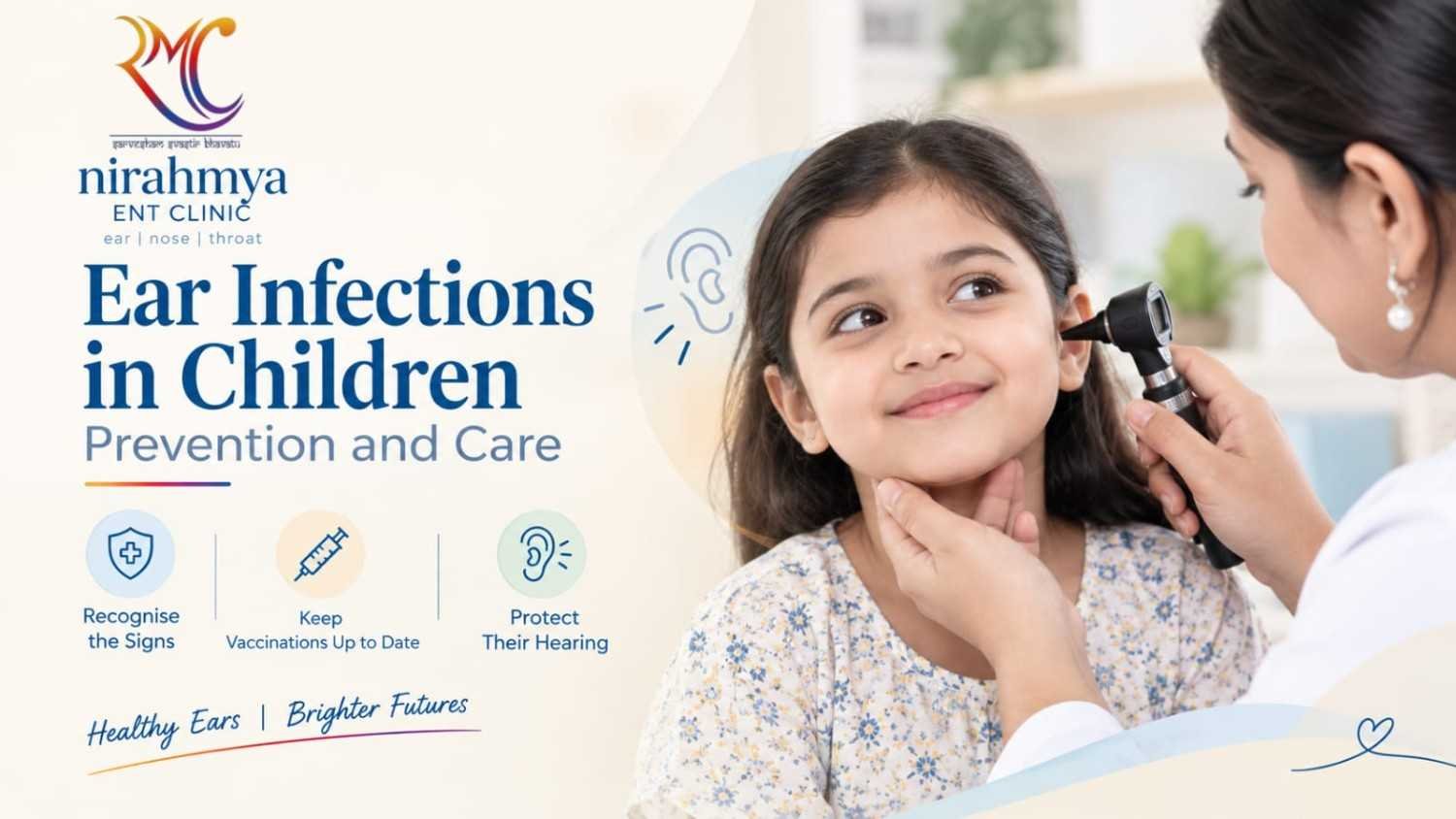
Ear Infections in Children: Prevention and Care
Ear infections are among the common reasons children experience ear pain and are taken to a doctor. They can be uncomfortable for a child and worrying for parents, particularly when they occur repeatedly. The good news is that many ear infections improve with appropriate care, and understanding the symptoms and possible causes can help parents know when medical evaluation is needed.
WHAT IS AN EAR INFECTION?
An ear infection occurs when part of the ear becomes inflamed or infected. In children, infections commonly affect the middle ear, the space behind the eardrum. Children are more prone to middle-ear infections partly because the Eustachian tube—the passage that helps ventilate and drain the middle ear—is smaller and positioned differently compared with adults. During a cold or respiratory infection, swelling around this passage can interfere with normal drainage and create conditions in which fluid can collect behind the eardrum. Not every child with fluid in the middle ear has an active infection. This distinction is important because the appropriate management can be different.
What are the common signs?
Depending on the child’s age, an ear infection may present differently. Parents may notice:
- Ear pain or pulling at the ear
- Irritability or unusual crying
- Difficulty sleeping
- Fever
- Reduced appetite
- Difficulty responding to sounds
- Temporary difficulty hearing
- Fluid or discharge coming from the ear
- A feeling of fullness or discomfort in the ear
In younger children who cannot clearly explain what they are experiencing, changes in sleep, feeding, or behaviour may sometimes be the first signs.
Why do children get ear infections?
Several factors can increase the likelihood of ear infections.
Colds and respiratory infections
A common cold can cause swelling and congestion around the Eustachian tube. This can interfere with ventilation and drainage of the middle ear.
Age
Young children are particularly susceptible because of the developing anatomy of their Eustachian tubes.
Exposure to tobacco smoke
Exposure to cigarette or tobacco smoke can increase the risk of ear infections and other respiratory problems in children. Keeping the child’s environment smoke-free is an important preventive measure.
Group childcare and frequent infections
Children who are frequently exposed to other children may experience more respiratory infections, which can increase the opportunities for middle-ear problems to develop.
Feeding position in infants
Feeding infants in a safe, appropriate position is important. Parents should follow their paediatrician’s advice regarding feeding practices, particularly in very young babies.
Does every ear infection require antibiotics?
No. This is an important point for parents. Some ear infections may improve without antibiotics, depending on the child’s age, symptoms, severity, and clinical findings. Antibiotics may be recommended in situations where bacterial infection is suspected or where the child’s symptoms and examination findings make treatment appropriate. The decision should be made by a healthcare professional after examining the child. Parents should not start leftover antibiotics or medication prescribed for another child. Appropriate antibiotic use is important because unnecessary antibiotics can cause side effects and contribute to antibiotic resistance.
What can parents do at home?
If your child has been evaluated and the doctor has recommended home care or observation, a few measures may help keep the child comfortable.
Manage pain appropriately
Pain relief may be recommended depending on the child’s age and health. Always use medicines according to the recommended dose and your doctor’s advice.
Encourage fluids
Keeping a child adequately hydrated is generally helpful during illness.
Allow adequate rest
Children may need additional rest while recovering from an infection.
Follow the prescribed treatment
If medication has been prescribed, follow the instructions carefully and complete treatment as directed by the healthcare professional. Parents should avoid putting oil, drops, or home remedies into a child’s ear unless specifically advised by a medical professional.
What about fluid behind the eardrum?
Sometimes an ear infection settles but fluid remains behind the eardrum for some time. This condition is often called otitis media with effusion or “glue ear.” A child may not have significant pain or fever, but the fluid can temporarily affect hearing. Persistent hearing difficulty in a child deserves attention because hearing plays an important role in speech, language development, learning, and communication. If fluid or hearing difficulty persists, an ENT specialist may recommend monitoring, a hearing assessment, or further treatment depending on the child’s individual situation.
When should parents take their child to a doctor?
Medical evaluation is advisable when a child has significant or persistent ear pain, repeated ear infections, hearing difficulties, or discharge from the ear. You should seek prompt medical attention if the child appears seriously unwell, has severe pain, swelling or redness around the ear, significant dizziness, facial weakness, or other concerning symptoms. Very young infants with fever should also be assessed promptly according to their age and the advice of their paediatrician.
What if ear infections keep coming back?
Repeated ear infections should not simply be ignored. An ENT specialist may assess:
- How frequently the infections are occurring
- Whether fluid remains behind the eardrum
- Whether hearing has been affected
- The child’s speech and language development
- The condition of the eardrum and middle ear
- Possible contributing factors
For some children with recurrent infections or persistent middle-ear fluid, additional treatment may be considered. In selected cases, ventilation tubes (also called ear tubes or grommets) may be discussed. The decision depends on the child’s individual history and examination rather than simply counting the number of earaches.
Can ear infections be prevented?
It is not possible to prevent every ear infection, but parents can take steps that may reduce the risk:
- Keep children away from cigarette and tobacco smoke.
- Keep vaccinations up to date as recommended by your child’s doctor.
- Encourage good hand hygiene to reduce the spread of respiratory infections.
- Breastfeeding may provide protection against some childhood infections when possible and appropriate.
- Avoid putting objects such as cotton buds into the child’s ear.
- Seek medical advice when hearing difficulties or repeated ear problems occur.
A final message from Dr. Yamini
Ear infections are common in childhood, but every episode deserves appropriate attention—especially when infections are frequent or hearing appears to be affected. As parents, it is natural to worry when your child is in pain. The important thing is not to self-medicate or assume that every earache requires antibiotics. A proper examination can help determine whether the problem is an active infection, fluid behind the eardrum, or another condition. Healthy hearing is an important part of a child’s communication and development. If you notice repeated ear problems or changes in your child’s hearing, an ENT evaluation can help you understand what is happening and what care may be appropriate.
— Dr. Yamini, ENT Specialist, Yamini’s ENT Clinic